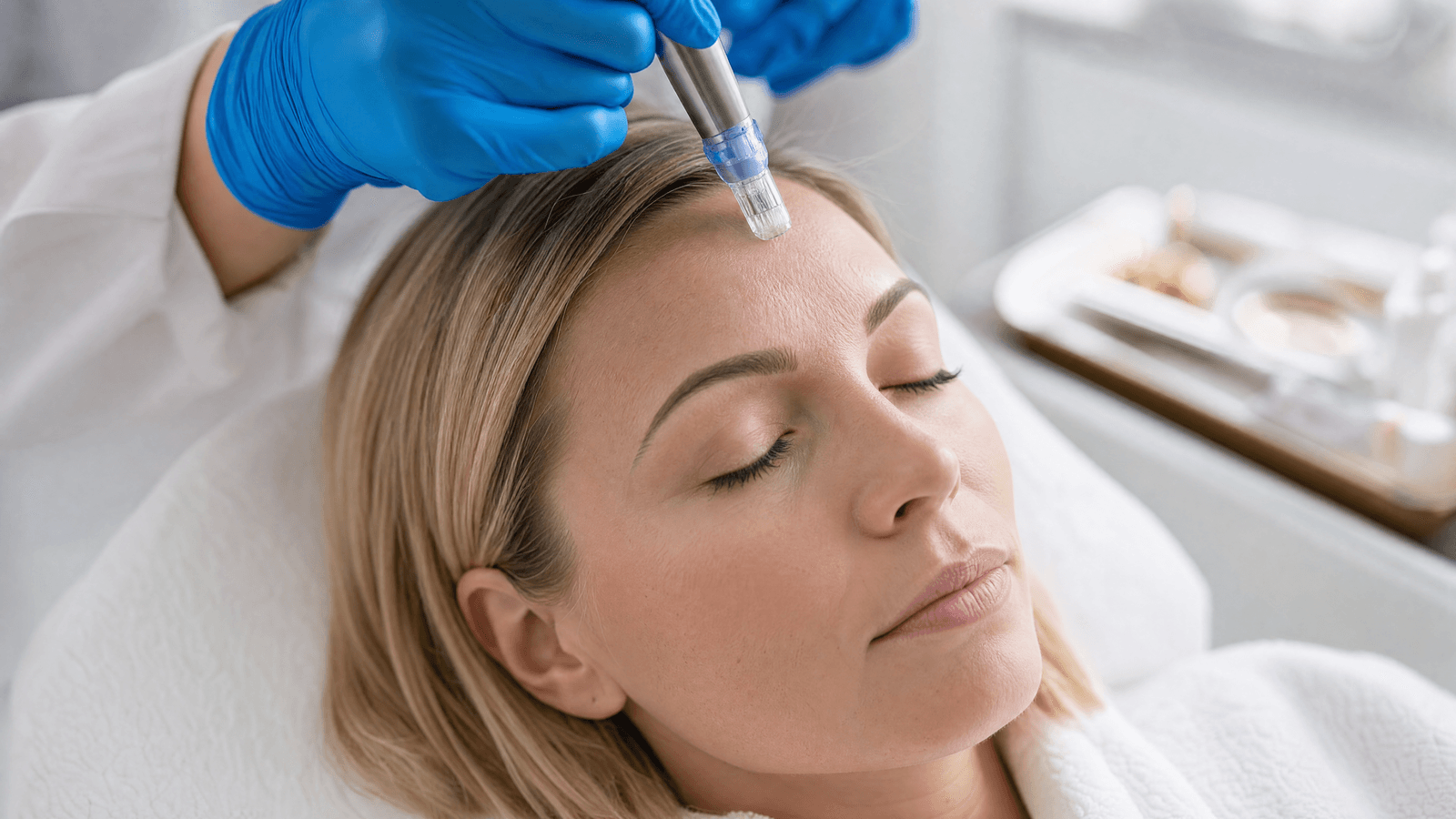
Melasma is fundamentally different from sun damage. It's a chronic condition where melanocytes overreact to UV, hormones, and inflammation — and aggressive treatment (CO2 laser, high-energy IPL, aggressive microneedling) often makes it worse by triggering pigment rebound. We approach melasma with a dermatology-grounded multi-modal protocol: strict sun protection, topical agents, gentle in-office treatments, and oral tranexamic acid for stubborn cases. Honest expectation-setting is the first step — melasma is manageable, not curable.
A typical melasma protocol: (1) strict daily mineral SPF 30+ and physical sun protection (non-negotiable), (2) compounded topical regimen — typically hydroquinone + tranexamic acid + kojic acid + retinoid, adjusted to skin tolerance, (3) gentle in-office treatments — ClearLift Q-Switched laser at conservative settings or low-energy Dye-VL IPL, sessions every 4 weeks for 3–6 sessions, (4) oral tranexamic acid for stubborn cases (250mg twice daily, requires baseline screening), (5) long-term maintenance — daily SPF, lower-strength topicals 2–3 nights weekly, periodic ClearLift sessions every 3–6 months. Most patients see significant improvement at 3–4 months with continued progress over 6 months. Sun exposure, hormonal triggers (pregnancy, contraceptives), and inflammation can cause recurrence — we plan for it.
Key Benefits
Common questions
Frequently asked
Is melasma curable?
No — melasma is manageable, not curable. It's a chronic condition driven by hormones, UV exposure, and genetics. The right plan can fade it dramatically and keep it controlled long-term, but the underlying tendency remains. Anyone promising a permanent cure is being dishonest.
Why do some lasers make melasma worse?
Melasma is fundamentally a heat- and inflammation-sensitive condition. Aggressive ablative lasers, IPL at standard settings, and even microneedling can trigger post-inflammatory hyperpigmentation that looks like darker melasma. This is why the wrong provider can set you back years.
Does tranexamic acid work for melasma?
Yes — tranexamic acid is one of the most effective melasma treatments available, both topically and orally. It blocks the signaling pathway between melanocytes and skin cells, reducing pigment overproduction at its source. We can prescribe and supervise oral tranexamic acid as part of stubborn cases.
Can melasma come back after treatment?
Yes — and it's the rule, not the exception. The triggers (sun exposure, hormones) don't go away. Maintenance is everything: daily mineral SPF 30+, hat outdoors, ongoing maintenance topicals, and periodic in-office treatments to address flare-ups before they entrench.
What's the typical cost?
Topicals (compounded prescription creams) typically run $50–$150/month. In-office ClearLift sessions $300–$450 each, with 3–6 sessions in a course. Oral tranexamic acid $30–$80/month. A typical 6-month plan is $1,500–$3,000 total.